The Journalist's Guide to Covering Massachusetts Government with InstaTrac

Covering Massachusetts government means finding the story in thousands of bills, lengthy hearings, and changing budget proposals. The Legislature saw 10,159 bills filed during the 2023–2024 session, while the FY2026 conference committee budget proposal allocated more than $61 billion. Following that volume of information takes time—especially when you’re also interviewing sources and writing on deadline.
InstaTrac helps journalists organize that work. MassInsider provides a daily political briefing, MassTrac supports legislative research and tracking, and MuniTrac makes participating municipalities’ meeting records easier to search.
Here’s how those tools can support your reporting, from spotting a developing story to examining the records behind it.
How can journalists follow Massachusetts political news each morning?
MassInsider is InstaTrac’s free weekday newsletter, bringing political news, legislative schedules, and policy updates into one briefing.
The newsletter draws from traditional publications, independent media, podcasts, and other political voices. It helps reporters see what’s receiving attention across the Commonwealth and prepare for interviews with a broader understanding of the day’s news.
For local journalists, it also offers a starting point for connecting State House developments to the communities they cover.
Journalists interested in having their work featured can contact arianna.cusick@globe.com.
How can journalists track Massachusetts bills and legislative updates?
For journalists who regularly cover the legislature, MassTrac is the most powerful research tool available. Here's a breakdown of the features most relevant to reporting:
Reporting task | MassTrac feature | Benefit for journalists |
|---|---|---|
Find legislation relevant to your beat | Find relevant proposals using everyday language, including when a bill uses different terminology. | |
Follow bills through the legislative process | Organize bills by reporting topic and monitor their status, hearings, amendments, and votes. | |
Stay informed about legislative developments | Receive business-day updates on tracked bills, amendments, hearings, and other activity. | |
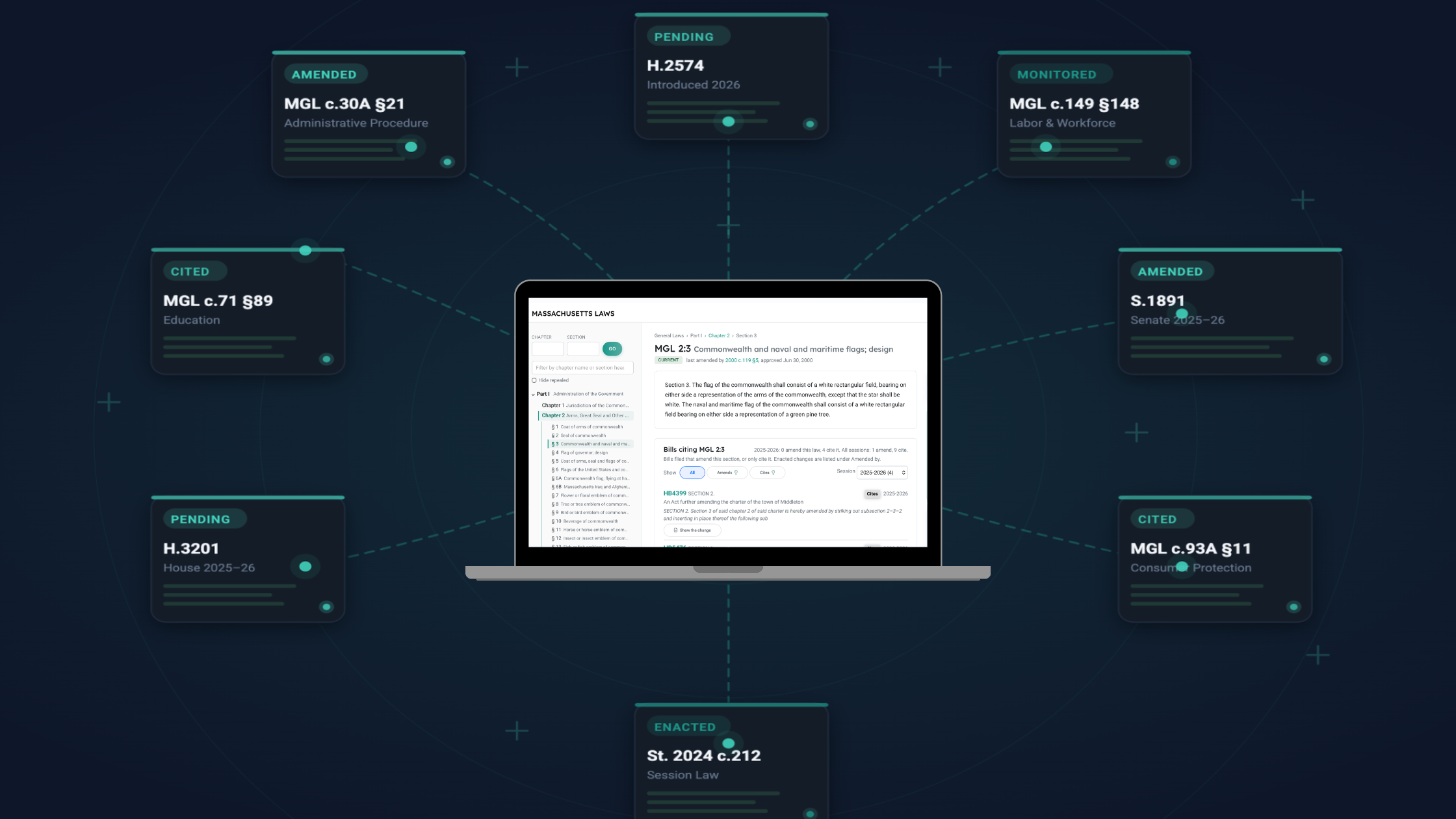
Monitor laws relevant to your beat | Track specific statutes, identify bills that would amend or reference them, and receive related updates through the Daily Alert. | |
Understand a proposal quickly | Get a plain-language introduction to a bill’s purpose and proposed changes. | |
Identify revisions | Locate language added, removed, edited, or moved between bill versions. | |
Follow bills through final negotiations | Identify conferees, access related bills and conference reports, and receive updates when committees report out or schedule hearings. | |
Find relevant testimony | Search hearings and formal sessions to locate statements and examine their context. Synopses of who spoke, and which bills were testified are included. | |
Prepare for interviews | Research lawmakers’ backgrounds, districts, committee assignments, and legislative activity. | |
Examine voting patterns | Review recorded votes and compare legislators across selected measures. | |
Reach the right office | Staff directories | Find contact information for legislators and their staff when seeking comment. |
Explain spending decisions | Review amendments, outside sections, and budget summaries to identify developments worth reporting. |
How can local journalists search city council and school committee meeting records?
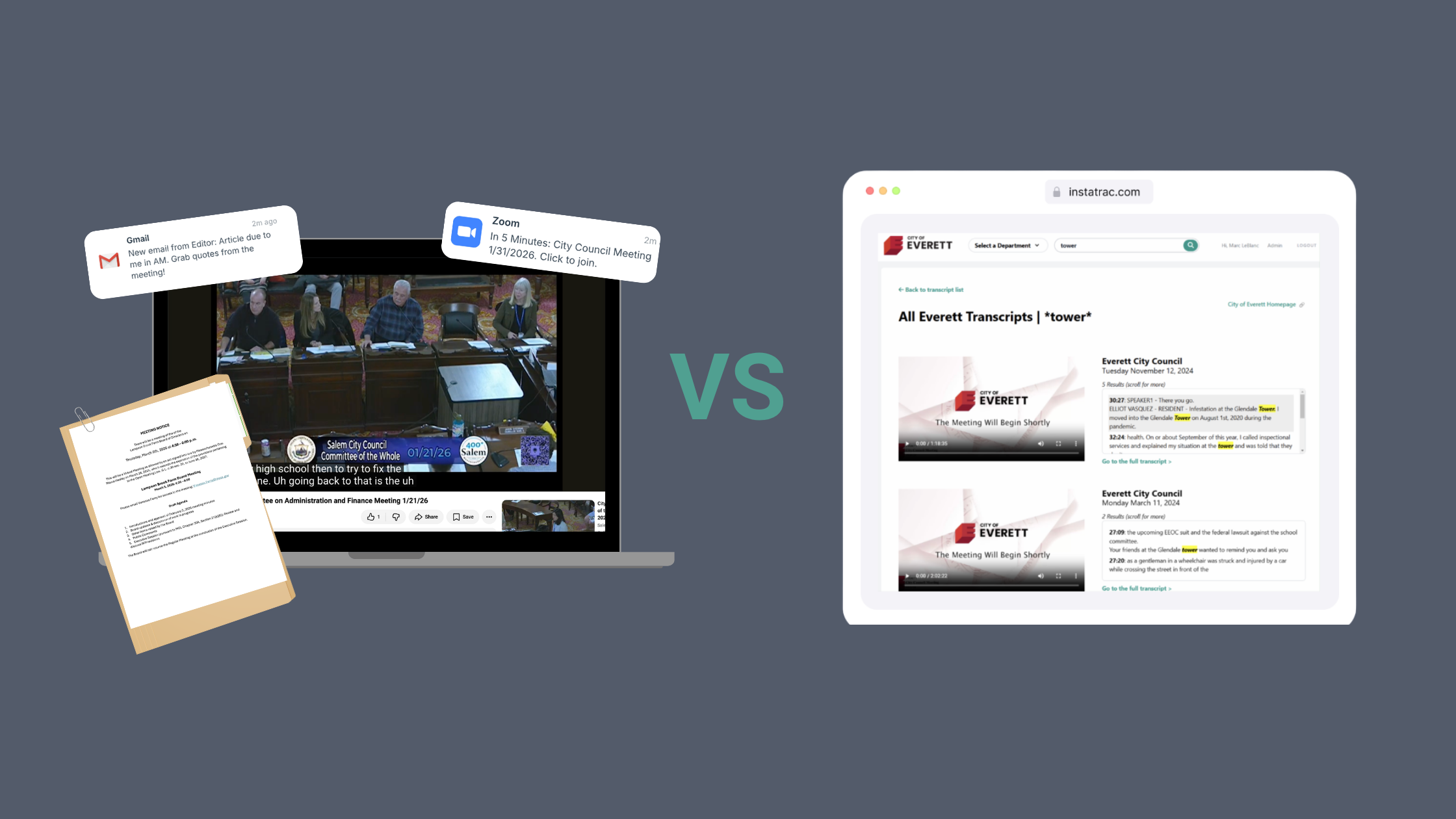
MuniTrac creates searchable, speaker-identified transcripts and organized meeting records for municipalities. Where those records are made public, journalists can search for a name, project, department, or issue and locate the relevant discussion.
As InstaTrac’s guide to MuniTrac for local reporters explains, searchable records can help journalists check wording, follow proposals across meetings, and revisit commitments officials made.
Access depends on the municipality’s use of MuniTrac and which records it publishes. For communities that provide public access, those records can support more detailed coverage of city councils, school committees, and other local boards.
How other journalists use InstaTrac data
You don't have to take our word for it. Reporters at some of Massachusetts' most prominent news organizations have been turning to MassTrac data to power their journalism for years.
WBUR reported that legislators had tacked on $81 million in amendments to the final $61.5 billion budget bill, relying on data compiled by MassTrac to quantify which lawmakers closest to Democratic leadership received the most funding (2025).
The Boston Globe has featured many articles using InstaTrac’s MassTrac platform:
The Globe used InstaTrac's vote data to trace candidate DiZoglio's legislative record over time, showing how her voting patterns shifted across her years in office (2022)
The Globe used an InstaTrac analysis of candidate Geoff Diehl's legislative record to examine the amendments he had filed on minimum wage legislation, providing context to campaign claims (2022)
The Globe cited InstaTrac data to show how minority leader Bradley Jones secured the second-highest number of earmarks of any House member (2019)
The Globe relied on Instatrac data to aide their investigation into legislative committee productivity (2024)
The Globe cited InstaTrac data on a senator's missed votes during an investigation into subsidized lawmaker travel (2018)
How can journalists get started with MassInsider and MassTrac?
The Massachusetts government moves fast and InstaTrac's tools were built for people who need to track all of it.
Whether you're breaking news on a budget amendment, writing a profile on a freshman legislator, or digging into what a town's school committee actually said about a controversial policy - MassInsider, MassTrac, and MuniTrac allow you to do it faster, more accurately, and more thoroughly.
Book a demo with our team to start your free trial and subscribe to MassInsider today at massinsider.net.